


 Cart
Cart
 sales@molnova.com



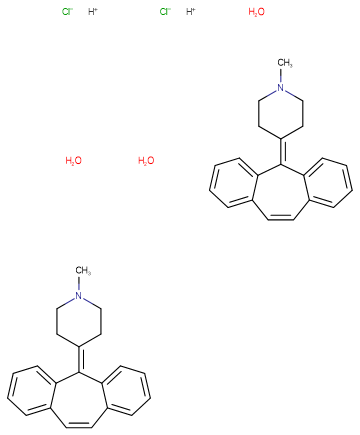
Cyproheptadine hydrochloride
CAS No. 41354-29-4
Cyproheptadine hydrochloride( —— )
Catalog No. M14416 CAS No. 41354-29-4
Cyproheptadine hydrochloride sesquihydrate is an antihistamine and is an antagonist of serotonin and histamine2.
Purity : >98% (HPLC)
 COA
Datasheet
HNMR
HPLC
MSDS
Handing Instructions
COA
Datasheet
HNMR
HPLC
MSDS
Handing Instructions
| Size | Price / USD | Stock | Quantity |
| 1G | 26 | In Stock |


|
Biological Information
-
Product NameCyproheptadine hydrochloride
-
NoteResearch use only, not for human use.
-
Brief DescriptionCyproheptadine hydrochloride sesquihydrate is an antihistamine and is an antagonist of serotonin and histamine2.
-
DescriptionCyproheptadine hydrochloride sesquihydrate is an antihistamine and is an antagonist of serotonin and histamine2.
-
In Vitro——
-
In Vivo——
-
Synonyms——
-
PathwayEndocrinology/Hormones
-
Target5-HT Receptor
-
Recptor5-HT2| SETD7| SETD9
-
Research AreaNeurological Disease
-
Indication——
Chemical Information
-
CAS Number41354-29-4
-
Formula Weight323.86
-
Molecular FormulaC21H22ClN
-
Purity>98% (HPLC)
-
SolubilityEthanol: 20 mg/mL (61.75 mM); DMSO: 65 mg/mL (200.7 mM)
-
SMILES[H+].[H+].O.O.O.[Cl-].[Cl-].CN1CCC(CC1)=C1C2=CC=CC=C2C=CC2=CC=CC=C12.CN1CCC(CC1)=C1C2=CC=CC=C2C=CC2=CC=CC=C12
-
Chemical Name——
Shipping & Storage Information
-
Storage(-20℃)
-
ShippingWith Ice Pack
-
Stability≥ 2 years
Reference
1.Rashid M, et al. Jpn J Pharmacol. 2002 Aug;89(4):405-12.
molnova catalog



related products
-
Protriptyline hydroc...
Protriptyline hydrochloride is a dibenzocycloheptene-derivative tricyclic antidepressant (TCA).
-
Telithromycin
Telithromycin is a ketolide antibiotic to treat community acquired pneumonia of mild to moderate severity. Antibacterial Telithromycin prevents bacteria from growing, by interfering with their protein synthesis.
-
Elemicin
Elemicin is a constituent of several plant species' essential oils. It has anticholinergic effects in humans
